

We had to go there to see where time and money were being lost
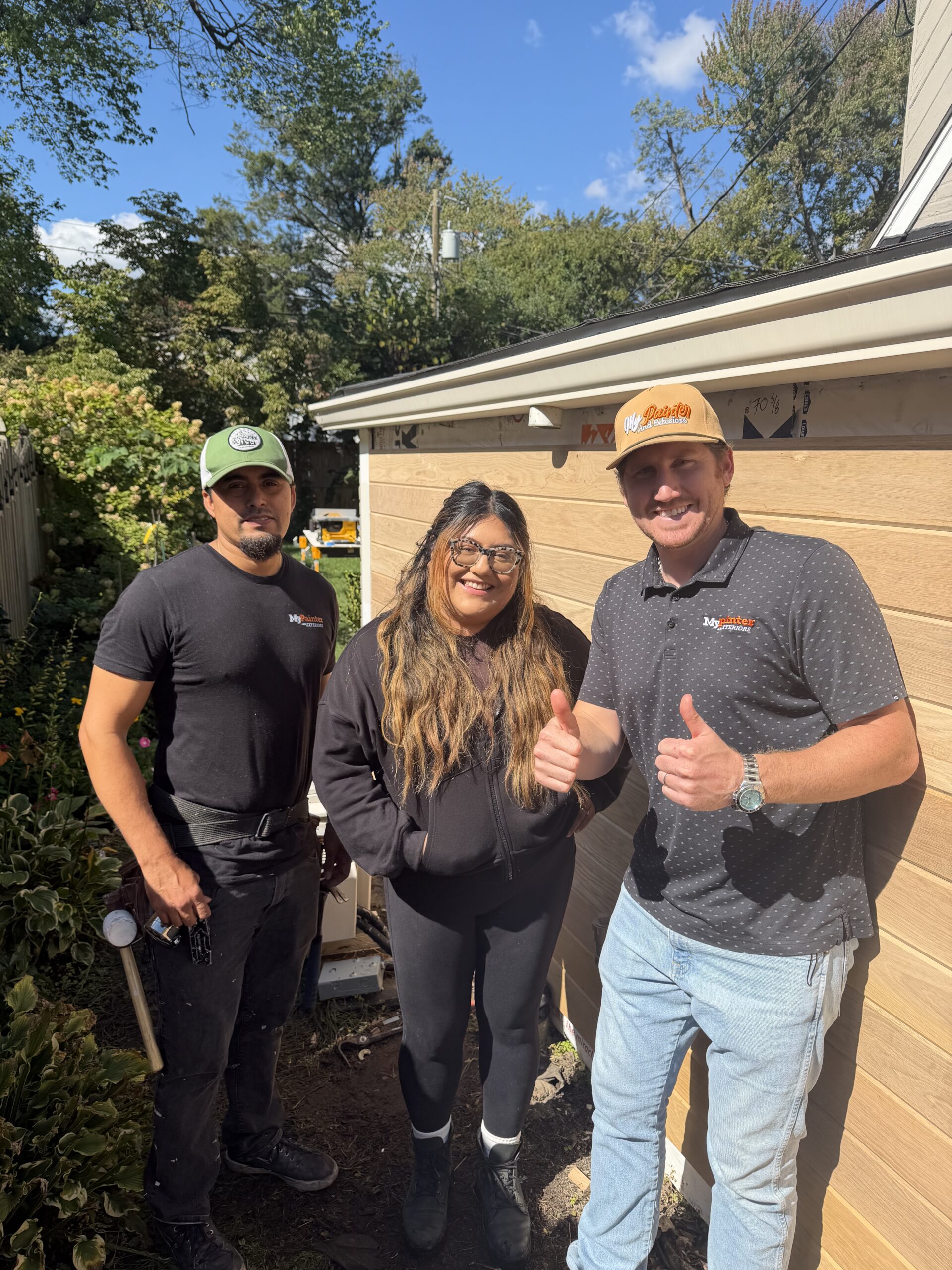
Recently, our team spent a day in the field with My Painter & Exteriors, working alongside frontline leaders to evaluate daily operations, identify inefficiencies, and uncover opportunities for continuous improvement.
Our objective was not simply to identify problems, but to help field leaders recognize waste and develop more efficient ways of working. Plus, at Precision SME, we believe the most effective business strategies are developed through a clear understanding of how work actually gets done – on the job.
"Real strategy isn’t born in a comfortable corporate boardroom—it’s built on the front lines by turning everyday jobsite efficiency into long-term profit."
Andrew Amrhein & Jim Bradley
What Precision observed during our field site visit
Using Lean management*, Lean construction, and continuous improvement principles, we looked at how painters moved through their tasks, where tools and materials were kept, and how jobs were organized to find where time, materials, and money were being wasted.
Here are six places we found profit slipping away—and what could change to help the team keep more of it.
1. The cost of work skyrocketed beyond the agreed scopeTwo extra walls painted. No extra pay.
We observed a painter cutting in beyond the defined project scope. As a result, two additional walls had to be painted at no additional charge. Field crews also had difficulty understanding where some tasks should begin and end.
What to change
Make estimates more detailed, clearly define where work begins and ends, and improve communication between estimating and production. Have the field lead verify the scope before work begins.
What you gain
Protect gross profit by reducing unpaid work and unnecessary labor and material costs.
2. Buying more materials than needed raised costsTwice the paint needed. Money left in the can.
On one project, approximately twice the required paint had been ordered. Field leads reported that they had raised concerns about excess paint purchasing for months across multiple projects. The feedback had not yet produced a consistent process change.
What to change
Improve paint quantity calculations, establish purchasing standards, and compare estimated quantities with actual use. Create a clear process for field leaders to report excess purchasing and get their feedback acted on.
What you gain
Lower material costs, less excess inventory, and more cash available for the business.
3. Unnecessary movement was an unnecessary costFive trips to the truck per hour. How much painting time lost?
We observed painters making approximately five trips per hour to their trucks for tools and supplies. Each trip meant stopping work, walking, searching, returning, and resetting.
For illustration, at two minutes per trip, five trips consume ten minutes per hour—more than an hour over an eight-hour shift. This is an illustrative calculation, not a measured time study.
What to change
Place tools and materials near where they will be used. Establish a consistent jobsite setup and prepare task-specific kits before work begins.
What you gain
More time spent painting without adding employees.
4. Repeated stops and resets cost time and moneyMoving the ladder 15 times an hour. Losing time at every step.
We observed approximately 15 ladder movements per hour in one work activity. Each repositioning interrupted production and required the painter to reset. Crews were not using jet rollers with extenders, and we identified an opportunity to test specialty cutting-in tools where appropriate. Frequent dipping into paint buckets also interrupted flow and created opportunities for material waste.
What to change
Evaluate extension-based painting equipment and test suitable cutting-in tools. Measure whether they reduce interruptions and improve results before making them standard practice.
What you gain
Fewer interruptions, more efficient use of labor and materials, and potentially less physical strain on crews.
5. Disorganized trucks and jobsites take up timeEvery search for a tool is time you’re paying for.
Trucks contained excess tools and supplies, with materials stacked on top of one another. Finding what was needed meant searching and moving things around. On the jobsite, outlet covers were piled together, supplies weren’t consistently organized, and paint spills added waste and cleanup time.
We use a workplace organization method called 5S to help crews keep trucks and jobsites organized, find tools quickly, and spend more time doing the work. Its five steps are:
- Sort: Remove tools and supplies that aren’t needed.
- Set in order: Give everything a designated place, with frequently used items easy to reach.
- Shine: Keep workspaces clean and equipment maintained so spills, damage, and other problems are easy to spot.
- Standardize: Establish consistent layouts and setup routines so everyone knows where things belong.
- Sustain: Make those routines part of everyday work, with clear responsibility for keeping them up.
What to change
Use the five steps of 5S to remove unnecessary items, give tools and supplies designated places, maintain clean workspaces, and establish consistent routines that crews follow every day.
What you gain
Less searching and handling, fewer interruptions, and more consistent jobsite performance.
6. Working without a clear sequence wastes timeZigzagging through the job. More steps, less progress.
Cutting-in and priming activities followed a zigzag pattern instead of a defined sequence. This added unnecessary movement and contributed to confusion about work boundaries.
What to change
Plan the work sequence before production begins. Clarify task boundaries, coordinate cutting-in, priming, and rolling, and train field leads to spot unnecessary backtracking throughout the day.
What you gain
Less backtracking, better control over the agreed scope, and more productive work time.
From field observations to financial improvement
Following the visit, we moved into a 2027 strategic planning session with My Painter & Exteriors. The field observations helped shape several priorities for the year ahead. One financial target was to reduce cost of goods sold (COGS) by 3 percentage points.
Three percentage points might sound small. But for a company with $4 million in annual sales, that could mean keeping another $120,000 from the same amount of sales, before implementation costs or other changes.
Here’s what that target could mean at different revenue levels:
(Reducing COGS is not simply cutting expenses or asking employees to work harder. It is improving how work is estimated, planned, organized, managed, and executed.)
|
Annual revenue |
Potential annual COGS (cost of goods) reduction |
|
$2 million |
$60,000 |
|
$4 million |
$120,000 |
|
$6 million |
$180,000 |
The effect on profit can be substantial
To illustrate, a $4 million business with a 10% gross margin earns $400,000 in gross profit. Reducing COGS by 3 percentage points would increase its gross margin to 13%, bringing gross profit to $520,000.
That’s 30% more gross profit ($120,000!) without selling another job!
These examples assume revenue stays the same and exclude implementation costs or other changes. The reduction is a target, not an achieved result.
Reducing COGS was only one part of the work ahead.
Much more went into their 2027 plan, including clearer job scopes, better purchasing practices, stronger field leadership, and more consistent jobsite routines. Together, those priorities gave the team practical changes to work on throughout the year—and a financial target to measure their progress against.
Fixing today’s waste is the start. Helping crews catch it tomorrow is the goal.
Organizing a truck once won’t keep it organized. Identifying excess paint won’t prevent the next overorder unless that information changes how purchasing happens. The next step is to turn what we observed into routines crews can use on every job.
- Start with one recurring problem. If painters keep returning to the truck, have the field lead work with the crew to prepare the tools and supplies they need before painting begins.
- Test the setup. See whether it reduces trips, and adjust it based on the crew’s experience.
- Make it the standard. When the setup works, use it consistently on similar jobs.
- Apply that same process to purchasing, scope checks, and task sequencing.
- Give someone responsibility for each change. Define how you’ll know it’s helping, and follow up.
But the most important outcome of a field visit is not merely a list of problems. It is helping frontline leaders ask better questions: Why are we making so many truck trips? Why do we buy more paint than needed? Why are ladders repositioned repeatedly? How can we organize the work to make it easier?
Those questions need to lead to action. Field leaders need the ability to test improvements with their crews—and a clear path for getting purchasing, estimating, or management involved when a change requires their support.
When leaders recognize and act on waste, they move from managing production to improving the systems that produce results.
That’s how improvement becomes part of the workday. Each job gives the team a chance to make the next one run better.
It should be clear now. Your crews can stay busy while your profit slips away.
Two extra walls painted for free. More paint purchased than the job needed. Repeated trips to the truck. Nothing has to look like a major problem to still take money out of a job.
At My Painter & Exteriors, those observations gave the team a practical starting point for its goal of reducing cost of goods sold by 3 percentage points. Instead of simply setting a financial target, they could identify changes in how jobs were estimated, supplied, organized, and completed that could help them reach it.
That’s where a profit goal becomes a plan: when your team knows what to do differently on the next job.
Thank you to Harrison Edwards and the My Painter & Exteriors team for welcoming us into the field and being willing to examine how everyday work could run better.
*Lean management is an approach to organizing and improving work by maximizing customer value while reducing waste. It emphasizes understanding how work flows, solving problems at their source, and continuously improving processes.
What would we find if we spent a day watching your crews work?
Where might you be losing time, using extra materials, or doing work you aren’t getting paid for? Those everyday habits can be difficult to notice when you’re focused on getting jobs finished.
That’s why Precision SME goes beyond the planning meeting and onto the jobsite. We work alongside your team to see where profit is slipping away, connect those observations to your financial goals, and help put practical improvements into place.
Let’s talk about what a closer look at your operations could uncover—and how we can help you keep more of what you earn.